Tuesday, November 08, 2005

Off Topic: The Princess Diaries

Hello, my name is Princess Diaz and I'm a short haired Chihuahua. I live in Southern California and I own over 20 bones. I am 11 years old and I'm still feisty as ever. My surrogate mommy (the cooking diva herself, Armida) has been extremely busy at work and hasn't been able to try any new recipes to post on her blog, so she asked me to write on her food blog for today.

When it comes to food, I am NOT a finicky eater. I eat everything from chicken to beef, guacamole to ice cream, and even onions, sunny-side-up eggs and spaghetti. By the way, doggies love pasta, especially spaghetti. So the entire spaghetti and meatball dinner scene in the movie Lady and the Tramp is all true! I think that movie was based on a true story.

But, of course, we dogs can't eat human food all the time because sometimes it hurts our tummies. Now, I know there are a lot of dog foods and dog treats out there but there are only two that I really like. My favorite treat of all time is Purina's Beggin' Bacon Strips. Actually, this is what I eat all the time. Since I'm so small, I only need two strips and that satisfies me for the day. I also really like doggie treats from Trader Joe's. Of course, if I had my way, I would eat chicken every day. One thing you must keep in mind when feeding dogs is that a 28 to 30% protein to 12% fat ratio is optimal. That's why I stay in shape, although in the winter time I do tend to put on a pound or two.

But, just like people, dogs are very different in their tastes. What I like doesn't mean other dogs will like. However what we do have in common is that dogs need to stay in shape, too. My favorite exercise is to run outside in the front yard and roll all over it. I also run to the mailbox and get the mail on a daily basis. Because I'm so small, I don't need to do much because I can burn calories faster, but larger breeds of dogs do need to work at it. For example, Max, a cousin I haven't met (he is a large breed dog), emailed me that he likes to go to the Balboa Dog Park and to the Ocean Beach Park. Fortunately for us dogs in San Diego, there are a lot of places we are welcomed, including restaurants and parks and even pet-friendly hotels.

Well, it's time for me to say goodbye. I hope you liked my blog. Please leave comments and maybe next time I will try to make a doggie treat recipe and post it here. So let me leave you with my Halloween picture (I am dressed as Princess Leah from Star Wars) and some words of wisdom:

"Don't overfeed your pet but do over pet it!"
~Princess Diaz

Monday, November 07, 2005

Awesome Cranberry Sauce

Have you ever wondered why we have cranberry sauce for Thanksgiving? In 1621 the Plymouth colonists and the Wampanoag Indians shared an autumn harvest feast which is now known as the first Thanksgiving. It wasn't until 1863 that President Abraham Lincoln proclaimed the first national Thanksgiving holiday. There are a lot of stories out there about how we began using cranberry sauce as a condiment for turkey and, unfortunately there are too many unconfirmed stories. One thing for sure is that at the "first" Thanksgiving staples such as pumpkin pie, cranberry sauce, corn and mashed potatoes were not served. All of those side dishes are modern additions. Nevertheless, cranberry sauce is a very important dish we need to have during Thanksgiving. The tartness of the cranberry brings out the flavor in the turkey. And I bet you didn't know that cranberries contain a natural preservative called benzoic acid that allows the berries to stay fresh for a relatively long time.

***

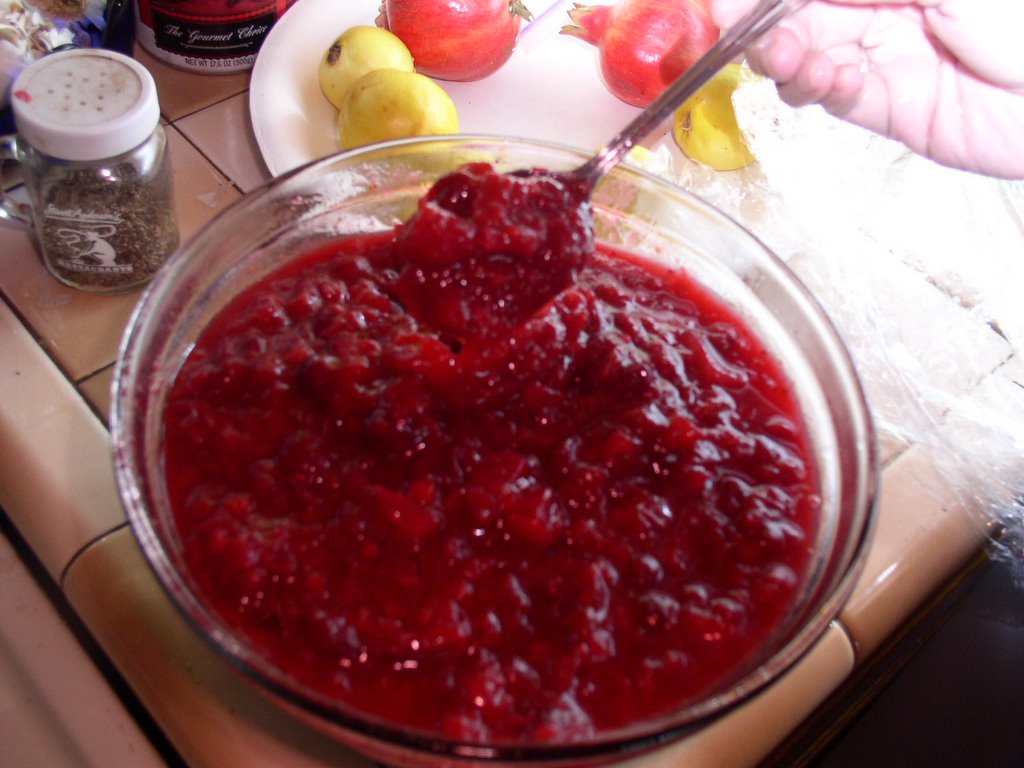
For the first time ever our family will not be together this year for Thanksgiving. My husband and I will be in Minnesota; my brother and his wife in Denver; my sister and her husband in Hawaii and my mom and step-dad will be on a Mexican Riviera cruise. So last night we had our Thanksgiving dinner at my mom's house and I was in charge of the cranberry sauce. I found the recipe on AllRecipes.com. I only ommited the nuts (some family members are allergic) but the sauce came out spectacular. This sauce will definitely be a part of our family Thanksgiving from now on.

INGREDIENTS:

  • 1 cup water
  • 1 cup white sugar
  • 1 (12 ounce) package fresh cranberries
  • 1 orange, peeled and pureed
  • 1 apple - peeled, cored and diced
  • 1 pear - peeled, cored and diced
  • 1 cup chopped dried apricots
  • 1/2 teaspoon salt
  • 1 teaspoon ground cinnamon
  • 1/2 teaspoon ground nutmeg

DIRECTIONS: In a medium saucepan, boil water and sugar until the sugar dissolves. Reduce the heat to simmer, and stir in cranberries, pureed orange, apple, pear, dried fruit, salt, cinnamon, and nutmeg. Cover, and simmer for 30 minutes, stirring occasionally, until the cranberries burst.

Remove from heat, and let cool to room temperature then store in the refrigerator. Cooked cranberries can last up to a month in a covered container in the refrigerator and if cooked with alcohol, can last for many months in the refrigerator.

Sunday, November 06, 2005

Boiled Yuca (Cassava)

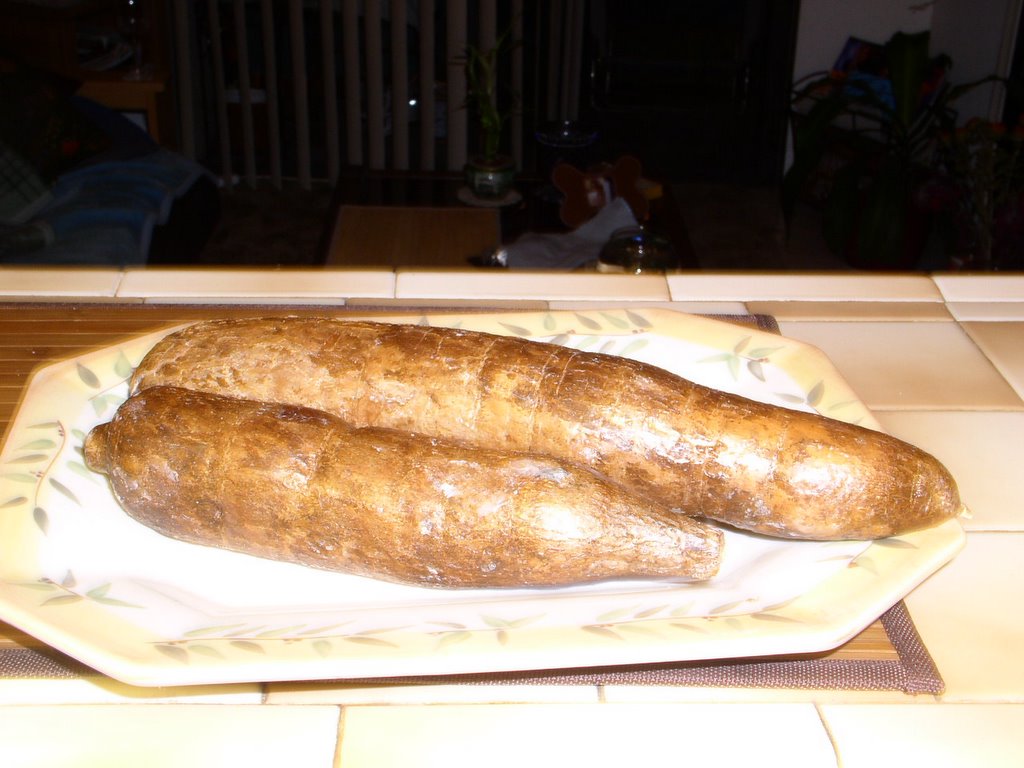
I'm sure you've seen this weird vegetable in your supermarket. It's a long, waxy and brown root with a rough exterior. That, my friend, is a yuca. This vegetable is part of the spurge family that is extensively cultivated as an annual crop for its edible starchy tuberous root. This root vegetable is very popular in Central and South American cooking, as well as in Caribbean cooking. After my mother married my step-father--who is from Puerto Rico-- almost 22 years ago, she started cooking the foods from his native country. And, as you've probably guessed, yuca is one of them.

There are many recipes out there for yuca, but the one I like the best is boiled yuca. After the yuca has been properly cooked, you can use it as a side dish just like boiled potatoes. The taste is something between squash and a potato combined. Please take note that once you begin to peel the yuca, place it in cold water or else it will brown immediately. Boiling the yuca takes about 45 minutes, so plan accordingly. The rind of the yuca is about 1mm thick, so make sure you peel all of it. Also, if the yuca is eaten raw, the root is poisonous and can be fatal because the digestive process produces cyanide within the body. So don't eat it raw!

INGREDIENTS

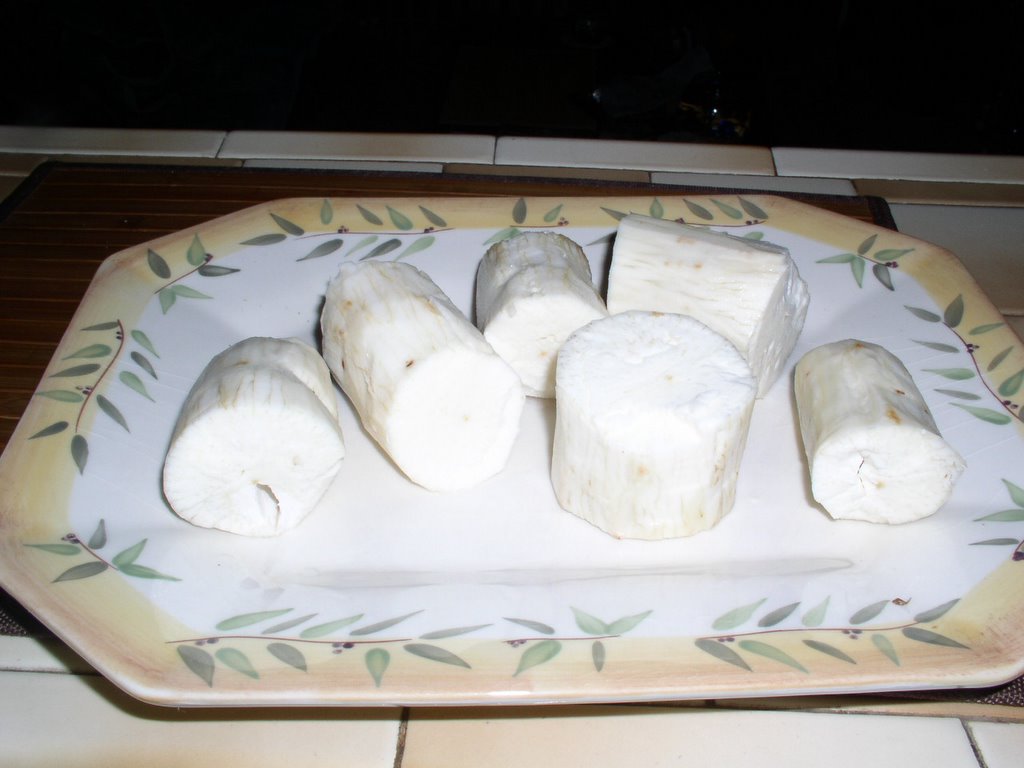
  • 2 yuccas (about 8 to 11 inches long), peeled and cut into 3" slices
  • 2 tbsp. salt
  • Additional Salt and Pepper
  • Butter
  1. Bring large pot filled with water to a boil. Add the slices of yuca and the salt. Boil for 45 minutes, or until the yucca is soft all the way through. Test with a fork.
  2. Drain water and serve immediately. There is a fibrous root that goes through the middle of the yuca. Make sure you remove it before eating it.
  3. Add butter and additional salt and pepper to taste to the yuca and enjoy!
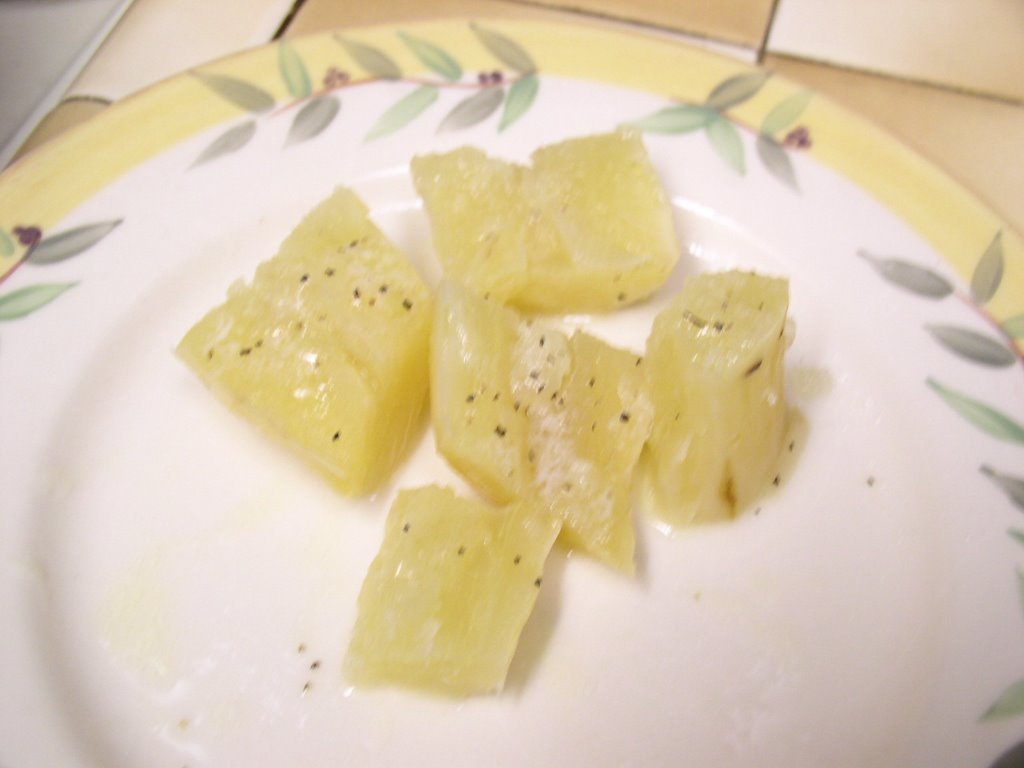
Boiled yuca with salt and pepper and butter.

Saturday, November 05, 2005

Brussel Sprouts with Bacon and Apples

Cabbage to me is one of those elusive vegetables that I love to hate. I love it in slaw and sauerkraut, but I hate it boiled or sauteéd. When I was in college I had my first taste of a Brussel Sprout. My roommate, Sapna, loved them. Of course, just like every American kid, I shied away from this weird veggie thinking I would hate it. But I gave in and I tasted one of the sprouts Sapna offered me. Little did I know that that first taste would turn me into a fan of this vegetable.

Brussel sprouts are known to be native to cool regions in northern Europe. The origin of these tiny cabbages is thought to be the result of a mutation from the Savoy cabbage subgroup. Eventually, these pequeño cabbages went commercial in America in the 1920's and today more than 5,000 acres of Brussel sprouts are harvested in California every year.

I wanted to have some type of cabbage with our Corned Beef and Boiled Potatoes meal but I was not boiling cabbage. So I decided to try this recipe I found in Everyday Food by Martha Stewart Living. I changed three things from the original recipe. First, I turned on my oven to 400º instead of the 425º the recipe calls for; I used apple cider vinegar instead of red wine vinegar; and I scaled it down from 4 pints of brussel sprouts to 1 pint (about 10 sprouts).

INGREDIENTS (serves 3)

  • 3 slices bacon, cut into 1/2-inch pieces
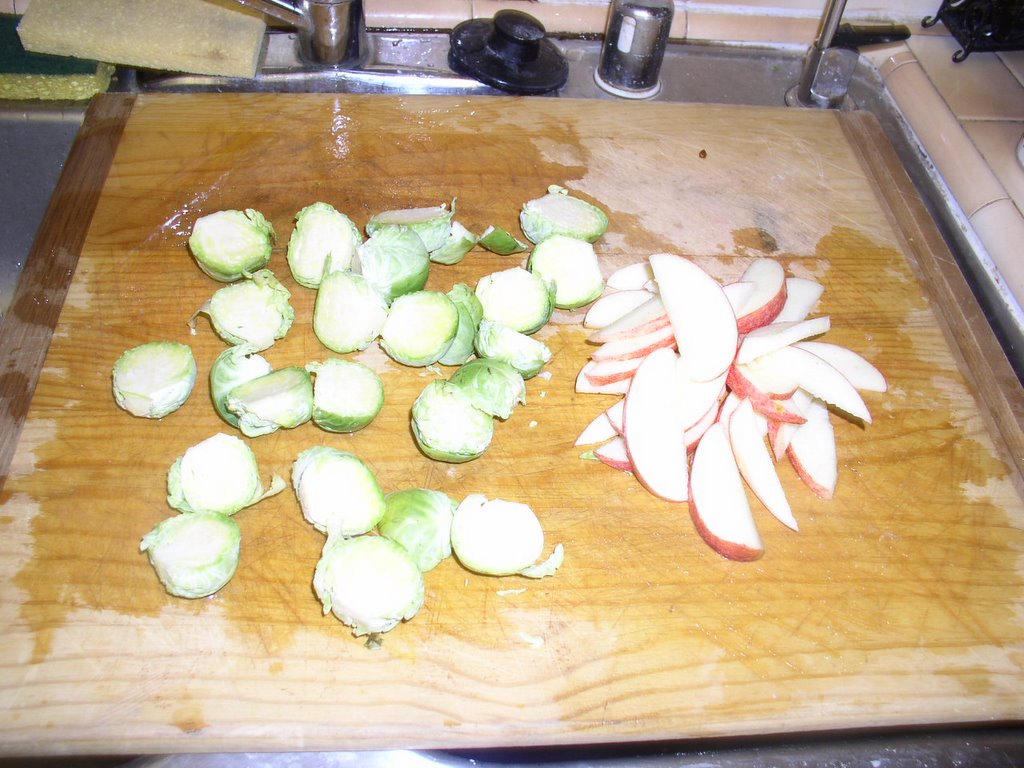
  • 10 Brussels sprouts, ends trimmed and halved
  • Coarse salt and ground pepper
  • 1/2 apple, cored and cut into 1/4-inch slices, each slice halved crosswise
  • 1/2 teaspoons red-wine vinegar (I used apple cider vinegar)
  1. Preheat oven to 400°. Arrange bacon in a single layer on a large rimmed baking sheet. Bake until browned, 8 minutes. Add Brussels sprouts in a single layer; sprinkle with salt and pepper. Roast until they begin to brown, about 10 minutes.
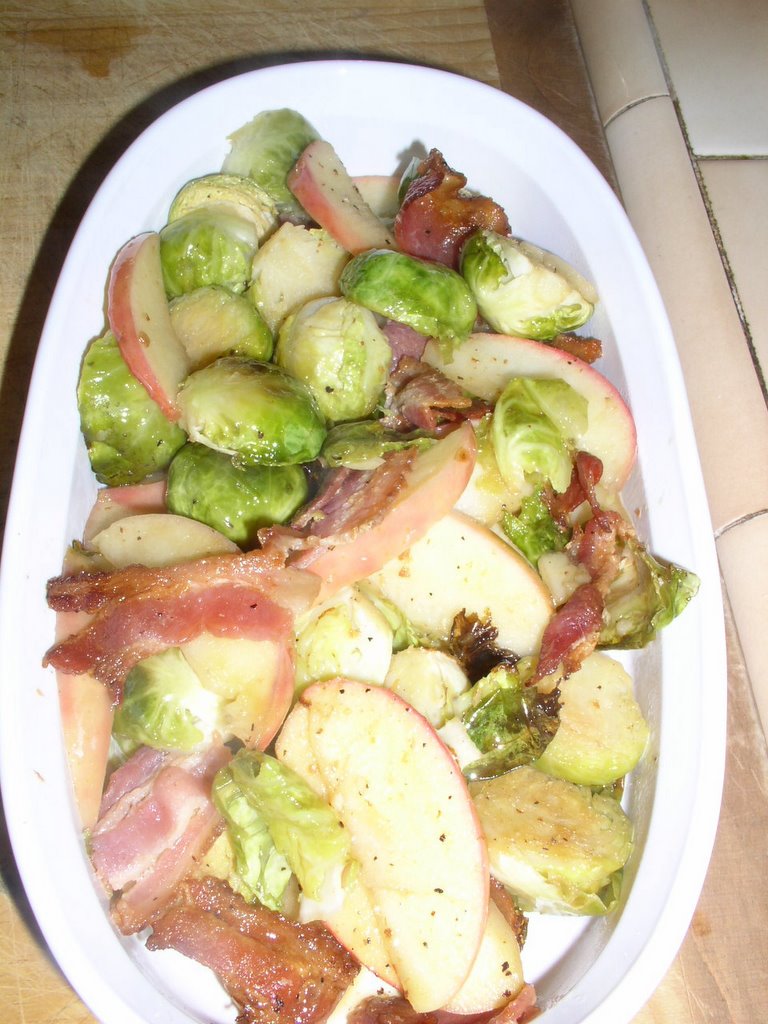
  2. Remove from oven, and toss in apple. Return to oven; roast until Brussels sprouts are browned and tender and apple has softened, about 8 to 10 more minutes.
  3. Toss vegetables with vinegar, additional salt, if necessary, and serve immediately.

Friday, November 04, 2005

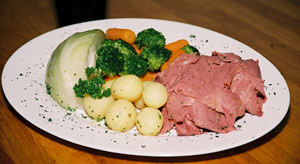
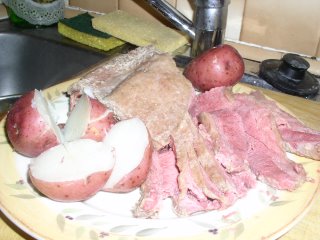
Corned Beef and Boiled Potatoes

corned beef and boiled potatoes
I grew up thinking that Corned Beef and Cabbage was a traditional dish served in Ireland. When I lived in Boston the pubs everywhere used to serve this so-called traditional Irish dish during St. Patrick's Day. But after some investigation I found out that Corned Beef and cabbage is more of an Irish-American dish. According to Bridgett Haggerty of the website Irish Cultures and Customs she says that their research shows that most likely a "bacon joint" or a piece of salted pork boiled with cabbage and potatoes would more likely [have been a feast in] the rural parts of Ireland.

Nevertheless, corned beef is a favorite dish of mine, specially during the winter months. However I am not a fan of boiled cabbage. It just does not sit well with me. I used a Corned Beef and Cabbage recipe from AllRecipes.com but I tweaked it a little and omitted the cabbage. The corned beef still came out delicious and my husband was very happy with the dish. He said it reminded him of St. Patricks Day in Minnesota. Weird, huh?

INGREDIENTS (4 servings):

  • 2-1/2 pounds corned beef brisket with spice packet
  • 8 small red potatoes
DIRECTIONS:
  1. Place corned beef in large pot or Dutch oven and cover with water. Add the spice packet that came with the corned beef. Cover pot and bring to a boil, then reduce to a simmer. Simmer approximately 50 minutes per pound or until tender (about 2 hours for a 2-1/2 lb brisket).
  2. Add whole potatoes and cook until the potatoes tender, about 15 minutes. Remove meat and let rest 5 minutes before serving.
  3. Slice meat across the grain and serve with the potatoes.

Thursday, November 03, 2005

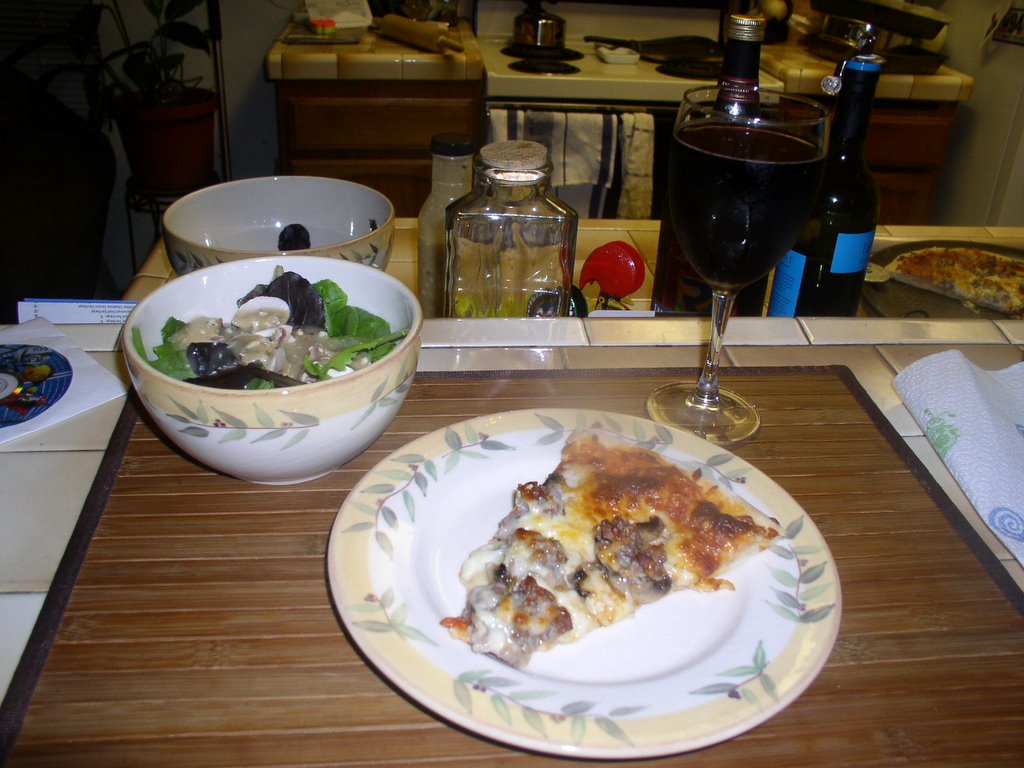
Sausage and Mushroom Pizza

Pizza! Who doesn't love pizza? Pizza is probably one of the most popular foods we consume. Why? Because it's easy to make, it cooks fast and it is customizable. And I think it's the customazation why this Italian fare is so popular amongst us. In America, pizza usually falls into two categories: thick and cheesy Chicago style or thin and more traditional New York pizza style. I personally like the thin and more traditional New York pizza. But of course, I have been told that no pizza here in the states tastes the same as a real Italian Pizza from Italy. But, for now, we have basic ingredients available to us that can help us create our own masterpieces.

Mona Lisa Restaurant in Little Italy, San Diego has, what I think, the best pizzas in the area. Bronx Pizza in Hillcrest also has excellent New York style pizzas but since I'm a Red Sox fan, I don't visit this joint during the baseball season! One of Robert's favorite pizza from Mona Lisa was the Sausage and Mushroom pizza. Since Dia de los Muertos was yesterday, my husband and I made this pizza in honor of my brother. We placed a slice on his altar as an offering. Of course, we ended up eating ALL of it. The key to this great pizza is ground Italian sausage from your butcher shop and to not crowd the pizza with toppings. Sometimes the simplest toppings are the best ones on a pizza.

For one pizza you will need:
  • 1 package of Trader Joe's Pizza Dough (or any ready-made dough)
  • 1/2 Cup your favorite pizza sauce (we used Trader Joe's Pizza Sauce)
  • 1 pint of white mushrooms, cleaned and sliced
  • 1/2 lb. ground Italian sausage, uncooked
  • 1 cup mozzarella cheese, grated
    1. 20 minutes before you start rolling out the dough, turn on the oven to 400 degrees.
    2. Roll out the dough, as per instructions, and place it on a pizza sheet or stone. The dough does not have to be perfectly round.
    3. First, top the dough with the pizza sauce. Use the back of a spoon to spread it around. Use as little or as much as you like. We used a little over a 1/2 cup.
    4. Sprinkle about one cup of mozzarella over the sauce, then place the sliced mushrooms over it.
    5. Finish by topping it with the ground Italian sausage. Leave clumps of it (see above picture)
    6. Bake in the hot oven between 15 to 20 minutes. You will see the sausage cook and brown (see picture below). Once the edges of the pizza turn golden brown and the cheese is melted, your pizza is ready.

    The fuly cooked pizza. Isn't it fabulous?

    Serve pizza with a salad and a nice glass of Burgundy or Lambrusco wine.

    Wednesday, November 02, 2005

    Tamales: A Brief History

    A sweet Pineapple Tamale we had at the Dia de los Muertos celebration

    Tamales to a Mexican is what roast beef is to most Americans: It's something you eat on special occassions. In my family, we usually have a tamale party before Christmas. In a tamale party most of the my (female) cousins and aunts gather at my grandmother's house and we start an assembly line and we make enough tamales to feed an army. As you can imagine, the process of making the tamales is a long one, so nowadays it's much easier to buy our tamales from various tamale vendors in the San Diego area.

    The best tamales I've had so far were from Mercado Internacional in Chula Vista, California. My husband, Matthew, couldn't get enough of the Rajas con Quese (jalapeño slices with cheese) tamales or the Tamales Dulce de Piña (sweet pineapple tamales).

    But what is a tamale? The original pre-Hispanic tamales were made by placing some uncooked masa (tortilla dough) on a fresh or dried and rehydrated corn husk, adding a filling of meat, seafood, insects, vegetables or fruit, wrapping the husk into a package and steaming it. Following the introduction of lard by the Spanish, this fat was added to the dough which makes it much lighter, and more savory. Tamales are also made with fresh ground corn. And on a side note: DO NOT EAT THE HUSK. I know a couple people who have tried to eat the husk and, I'm told, it's not a very pleasant taste.

    I found several good websites on making tamales and its history. There is also a great book called, Tales 101: A Beginner's Guide to Making Traditional Tamales. If you're planning on making tamales and/or making tamales a part of your family tradition, this is the book to buy. To see other resources and recipes, check out

    Gourmet Sleuth.com.

    Tuesday, November 01, 2005

    Bread of the Dead

    An altar with Pan de Muertos

    In Mexico we celebrate Día de los Muertos, or the Day of the Dead, from October 31st to November 2nd. It is Mexico's festive annual celebration of life—and death. The modern celebration, now an official Catholic holiday, owes its roots to the Aztecs, who devoted two full months of the year to honor the dead and assist departed souls to their final destination. Pan de Muertos, or Bread of the Dead, is a round piece of bread with a cross designed on the top of it. The more traditional bread has bones designed on to of it and sometimes bakers shape these breads into flowers or animals. Pan de muertos is made out of flour, salt, fresh leavening, sugar, My brother's altar, with candle and Sugar Skullbutter or lard, eggs, milk and anise seed. The breads are placed on shrines and altars as offerings for the deceased and are given to visitors arriving for the celebration. The breads are very soft and buttery and are a cross between Hawaiian rolls and croissants. They are not too sweet at all and I specially like to eat them with a hot cup of coffee or hot chocolate. Unfortunately, I did not make the recipe because I did not have enough time, but we attended a mass where they gave out the breads (made into individual loaves). NOTE: This recipe calls for orange flower water, which is available in many large supermarkets and specialty food stores. It gives a subtle orange flavor. One teaspoon of finely grated orange zest can be substituted, but the bread will have a bolder taste.

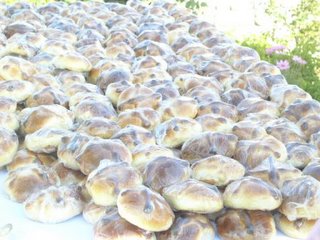
    Individual breads given out at mass

    INGREDIENTS

    Dough:

    • 1 scant tablespoon or 1 (1/4-ounce) package active dry yeast

    • 1/4 cup warm water (about 110°F)

    • 1/2 cup milk

    • 3 large eggs, beaten

    • 1/4 cup (1/2 stick) unsalted butter, softened

    • 2 teaspoons orange flower water

    • 1 teaspoon salt

    • 1 teaspoon anise seeds

    • 1/4 cup granulated sugar

    • 4 to 4 1/2 cups unbleached all purpose flour

    Topping:

    • 1 large egg

    • 1 tablespoon granulated sugar

    In the mixer bowl, sprinkle the yeast in the water to soften. Heat the milk to 110°F and add it to the yeast along with the eggs, butter. Orange flower water, salt, anise seeds, sugar, and 2 cups of the flour. Using the mixer paddle beat on medium-low speed for 2 minutes. Gradually add the remaining flour 1/4 cup at a time until the dough begins to pull away from the side of the bowl. Change to the dough hook. Continue to add flour 1 tablespoon at a time until the dough just begins to clean the bowl. Knead 4 to 5 minutes on medium-low.

    First Rise: Put the dough in an oiled bowl and turn to coat the entire ball of dough with oil. Cover with a tightly woven towel and let rise until doubled, about one hour.

    Shape: Turn the dough out onto a lightly oiled work surface. Remove a tennis-ball-sized portion of dough and set aside. Shape the larger piece of dough into a smooth ball and place on a parchment-lined or well-seasoned baking sheet. Flatten the dough into a 1-inch-thick disk. Divide the remaining dough in half and roll each piece into an 8-inch rope. Lay the ropes on top of the loaf parallel to each other about 3 inches apart. With scissors or a knife, cut into the end of each rope about 3/4 inch and spread the ends apart slightly to resemble bones.

    Second Rise: Cover with a tightly woven towel and let rise for 45 minutes. Preheat Oven: About 10 minutes before baking, preheat the oven to 375°F. Prepare topping: Beat the egg and sugar until the sugar dissolves, and then brush the mixture on the top and sides of the bread.

    Bake and Cool: Bake for 30 minutes until the internal temperature of the bread reaches 190°F. Immediately remove the bread from the baking sheet and place on a rack to cool.

    NOTE: This bread freezes nicely for up to 6 months. To serve, first thaw the bread, then reheat on a baking sheet or directly on the oven rack in a 375°F oven for 7 to 10 minutes.

    Recipe courtesy of Catholic Culture.com

    Sunday, October 30, 2005

    Decorating Sugar Skulls

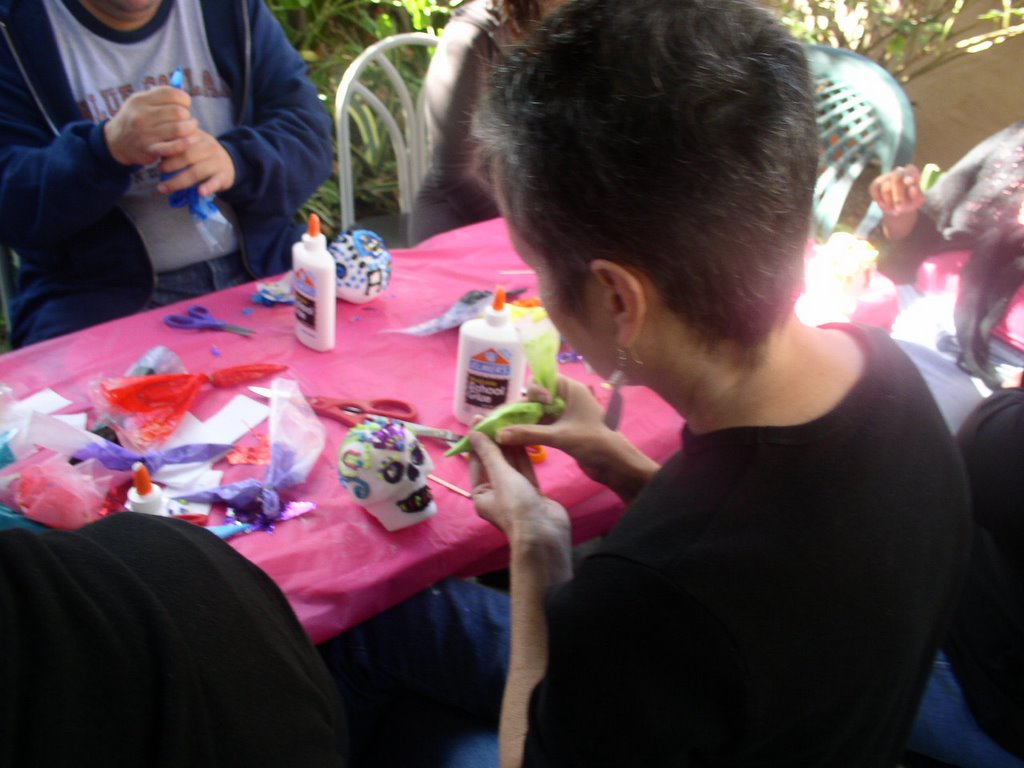
    On Saturday morning, Matthew, my step-mom Elaine and myself attended a Sugar Skull Decorating class at Back from Tomboctou, a store full of unique Mexican Folk Art. At the class, our instructor showed us how to make sugar skulls from sugar, meringue powder and water. Many colored sugar icings were provided to us along with shiny foil papers to use as decorations. As you can see from the pictures below, the three of us went a little crazy with our decorating.

    Our instructor giving us tips on decorating the sugar skulls.

    The beginnings of my skull. The eyes and teeth have colored foil in them.

    The beginnings of Matthew's skull. Note his elaborate use of colors. Most of the decorations on this one are made of sugar icing.

    My step-mom Elaine concentrating on her skull.

    My skull: I'm adding the finishing touches here.

    And here is my finished product. Notice it has a cross made out of foil in the forehead. I also put my brother's name, Robert, in the back of the skull to honor him on the Day of the Dead.

    Here is Elaine's finished skull. I really like her use of color here. I think Martha Stewart would be very impressed!

    And finally, here is Matthew's skull. His was the most elaborately decorated, I think. Notice the Celtic Cross across the forehead. Matthew put an "M" and "B" in the back of the skull to honor and remember his grandmother, Marguerite Burns.

    Thursday, October 27, 2005

    Coming Soon: Dia de los Muertos

    Stay tuned for some fun sugar skulls I'll be making this weekend and homemade bread we'll be offering to our beloved departed ones.

    What is Dia de los Muertos (Day of the Dead)? Día de los Muertos is an important Mexican holiday for families to remember their dead loved ones and to be reminded of the continuity of life. Día de los Muertos is rich in symbolism and traditions evolving since the time of the Aztecs. It is not a somber or morbid occasion, it is a celebration of their departed loved ones’ souls returning for a brief visit. Celebrated during the first two days of November, Día de los Muertos festivities include visiting gravesites of close relatives, decorating gravesites with flowers, enjoying a picnic, and interacting with other family and community members who gather at the cemetery. Families remember the departed by telling stories about them. Ofrendas (blessed altars) erected at the cemetery or at home are decorated with flowers (primarily marigolds) and are adorned with religious amulets, and offerings of food and drink. Also decorating the altars are photos of the deceased as well as candles, gifts, and other items they were fond of during their lifetimes. It is believed that the returning souls enjoy the treats left for them at the ofrendas. Find out more fun facts here at AZCentral.com.

    Wednesday, October 26, 2005

    Brie en Croute

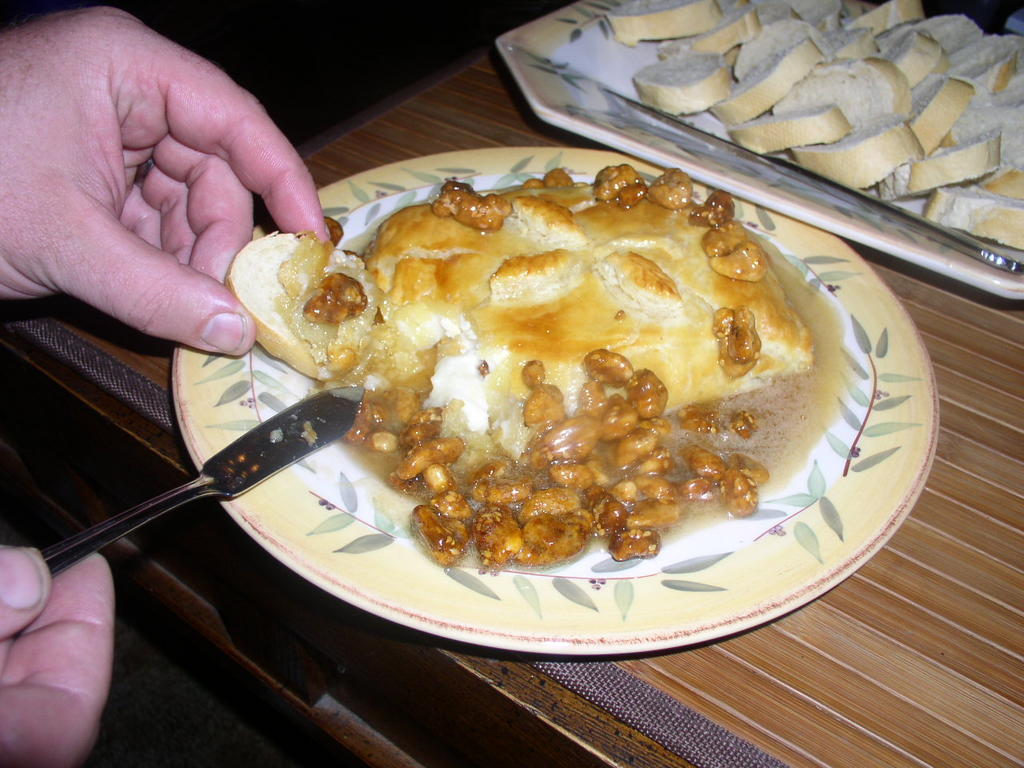
    Earlier this year, my husband and I went on a winery tour of Temecula, California. Temecula is no Napa or Sonoma, but its location and its charm makes is a great place to visit, especially if you fancy yourself a wine connoisseur on a budget. There are 20 Temecula wineries and a handful of them are internationally known. One of the most renowned and visited is Thornton Winery. Thornton is well known for its award-winning champagnes and premium varietals. On our trip there, we ate at Café Champagne (note: try not to go on a busy weekend, otherwise you're looking at a wait time in order to sit down and eat) and we each had a flight of champagnes and wines. With our tasting we ordered a Baked Brie Wrapped in Puff Pastry with Honey Walnut Sauce and, OH MY GAWD it was delicious.

    Ever since our trip to Temecula, I've been trying to recreate the recipe. I found that they have their recipe online now, but you can try my version below. They taste very similar and it goes just divine with champagne. Go on now, go make it...

    INGREDIENTS

    • 1 sheet frozen puff pastry, pre-packaged
    • 4 tablespoon unsalted butter
    • 1/2 cup Emerald Glazed Walnuts, original flavor
    • 1/8 teaspoon ground cinnamon
    • 1 (8-ounce) wheel Brie
    • 1/4 to 1/3 cup honey
    • 1 egg, beaten
    • Crusty bread, for serving

    Preheat oven to 375 degrees F. Defrost puff pastry for approximately 15 to 20 minutes and unfold.

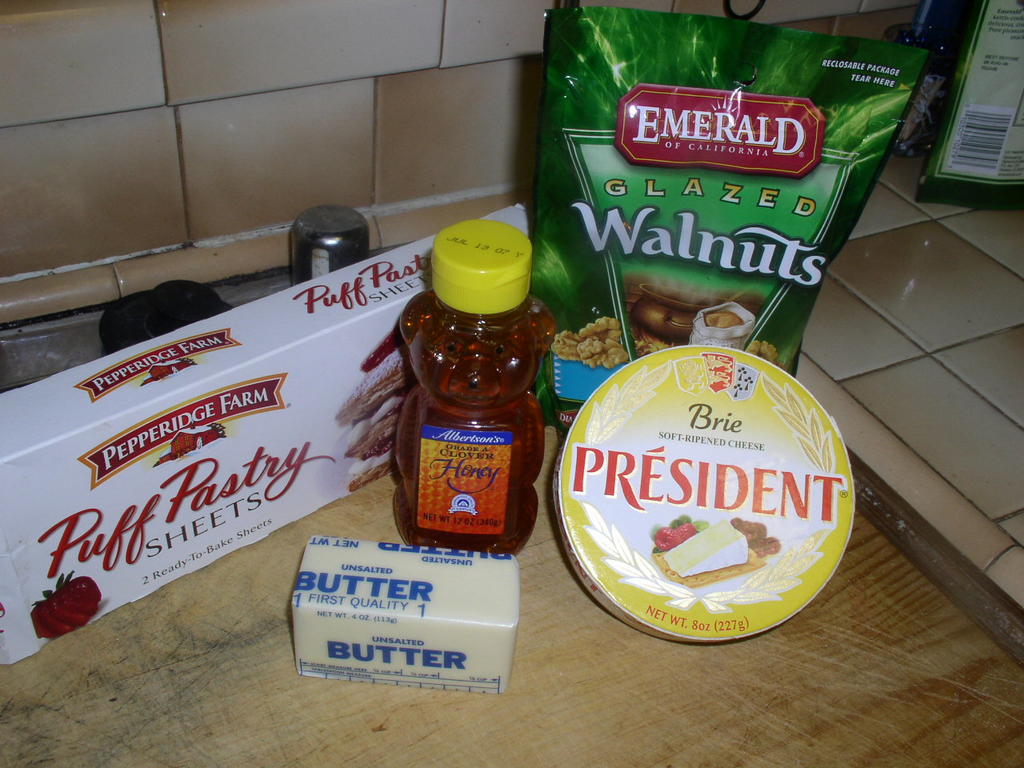
    Here are all the ingredients you need: one sheet of puff pastry, 1 wheel of brie (8oz), 4 tablespoons of butter, 1/8 teaspons ground cinnamon, 1/4 -1/3 cup honey and 1/2 cup glazed walnuts (try Emerald Glazed Walnuts).

    First, cut the white rind from the sides of the brie then, with a serrated knife, scrape some of the rind from the top and bottom of brie. You do not have to scrape it all off, just enough so there is still a light film of rind left.

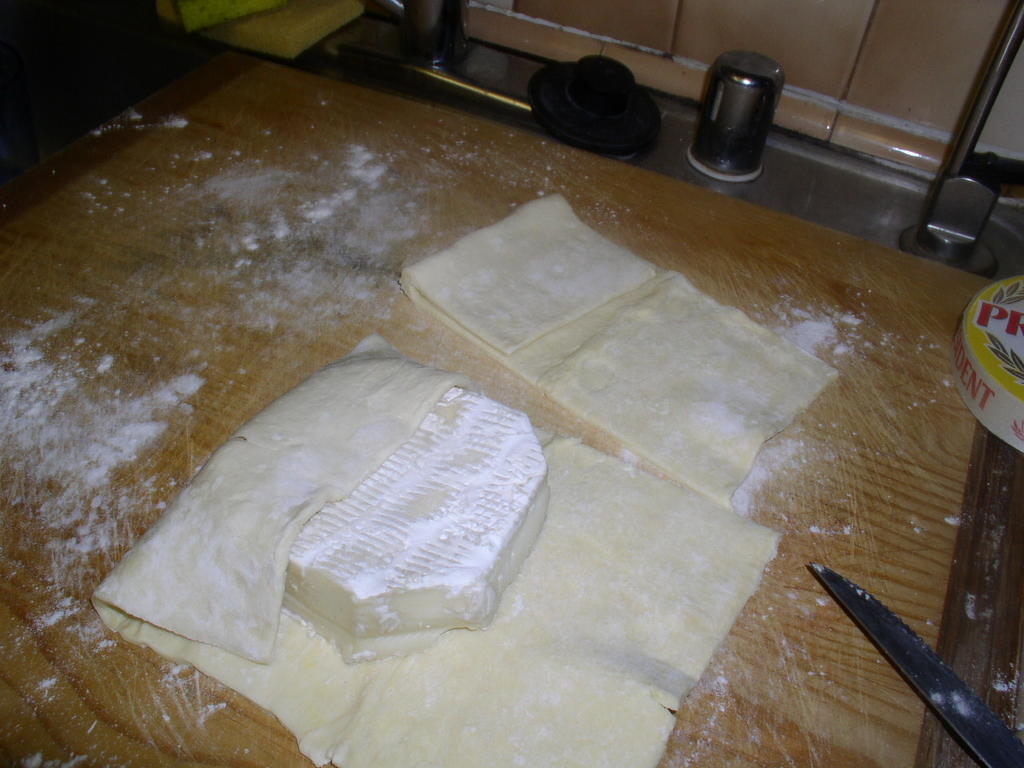
    Lay the puff pastry out on a flat surface. Place the brie in the center of the pastry. Leave about one inch on each side of the puff pastry (you may need to cut it to make it fit--see above picture). Gather the pastry as if wrapping a gift and gently squeeze together the sides of the dugh and press with your fingertips.

    Brush the beaten egg over top and side of Brie. Place Brie on a cookie sheet and bake for 35 minutes until pastry is golden brown.

    Once your brie is down, place it on a shallow serving platter or a large dinner plate. Now it's time to make the honey butter.

    In a pan, melt the 4 tablespoons of butter and add the honey and cinnamon.

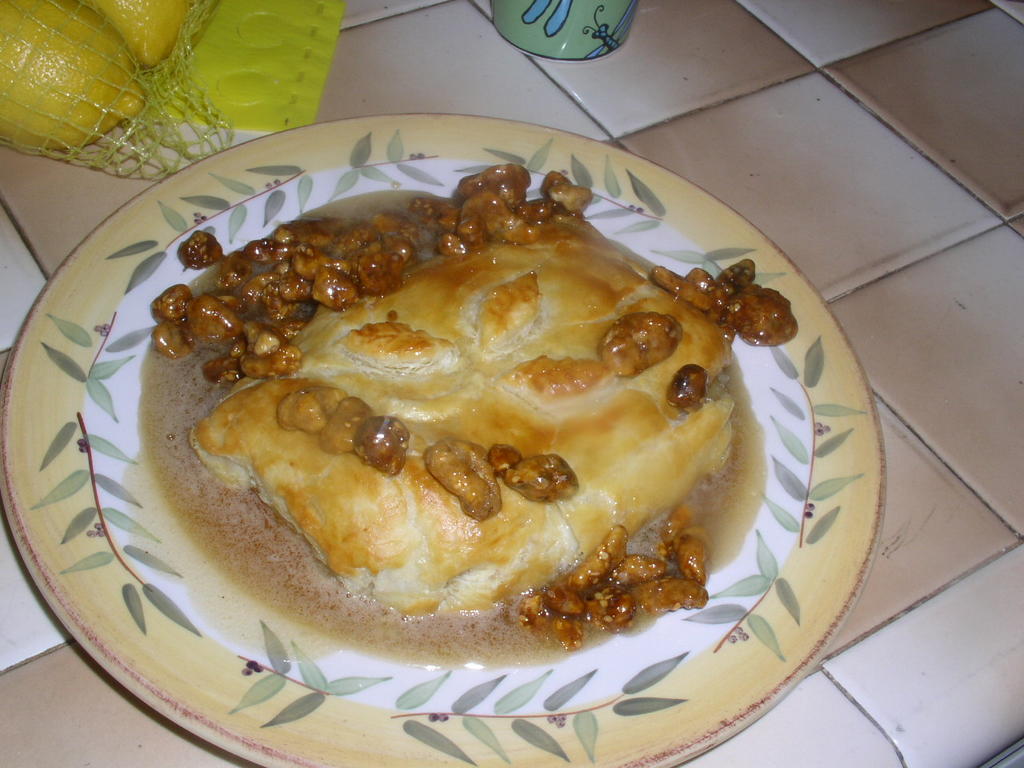
    Pour the honey-butter over the baked brie and top with the glazed walnuts.

    Serve with toasted bread or crackers and enjoy!

    Tuesday, October 25, 2005

    Lindsey's Hot Toddy

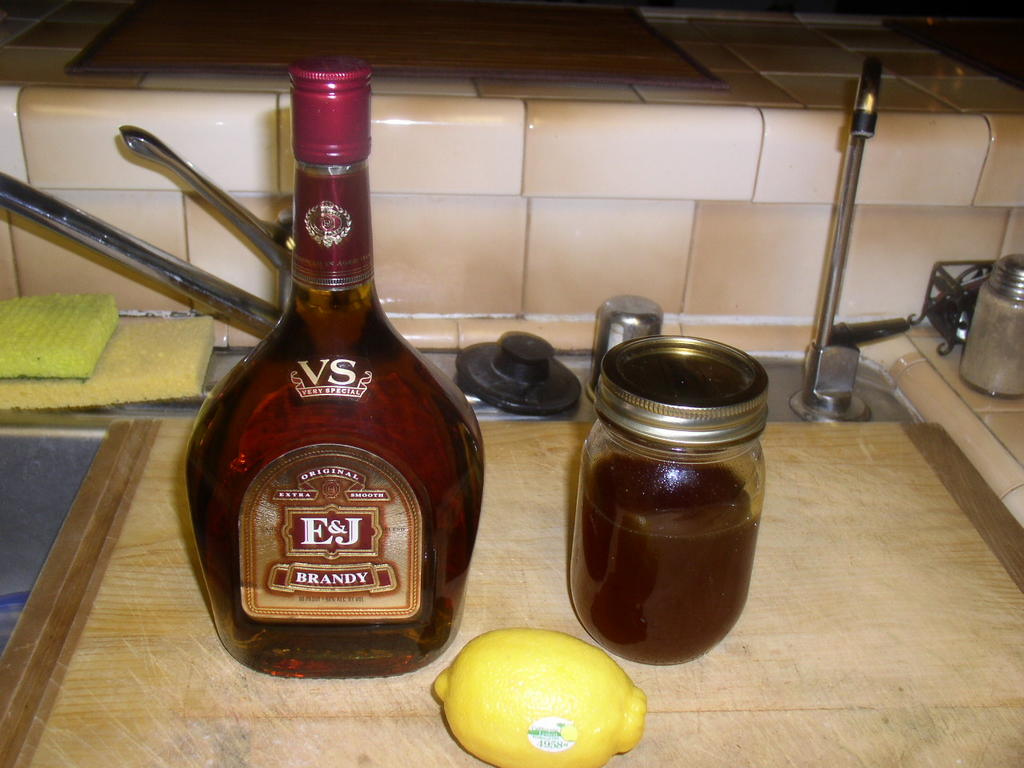
    A couple of years ago my brother Tom and his girlfriend moved in together. His girlfriend (now wife) Lindsey, came by way of Denver, Colorado and she brought with her her family recipes, including her now famous, Hot Toddy. I recall it was the winter of 2002 and there was a wicked flu and cold epidemic going around. One evening my roommate Isabel, Lindsey and myself all found ourselves suffereing from the cold. Lindsey made us a hot toddy and, kid you not, we felt much better right away. This drink is NOT recommeded for anyone under 18 because it does contain a lot of alcohol and also, you shouldn't mix alcohol with medication. But if you ever find yourself under the weather or just feel like having a nice, hot, steamy toddy, try this recipe. It will definitely make you feel better.

    INGREDIENTS (1 serving)

    • 2 Shots Brandy
    • The juice of one Lemon
    • The juice of one Lime
    • 2 TBSP or more to taste of Honey
    • A microwaveble safe mug
    In the microwaveable safe mug, add all the ingredients. Place it in the microwave on high for 2 minutes, until it starts to bubble. Be careful because it's hot. If you find this drink too strong, you can add a 1/2 cup of hot brewed tea (preferebly chamomile or jasmine) to the toddy. I also found that breathing in the steam from the hot toddy clears out your sinuses.

    I used E&J Brandy, and 100% honey from the Jim Blaha beehives in Northfield, MN.

    Add two shots of Brandy to the mug.

    Next, add the lemon and lime juices and then drizzle in the honey.

    Microwave on high for 2 minutes and you're ready to start feeling better!

    Monday, October 24, 2005

    Grilled Portabella Mushrooms

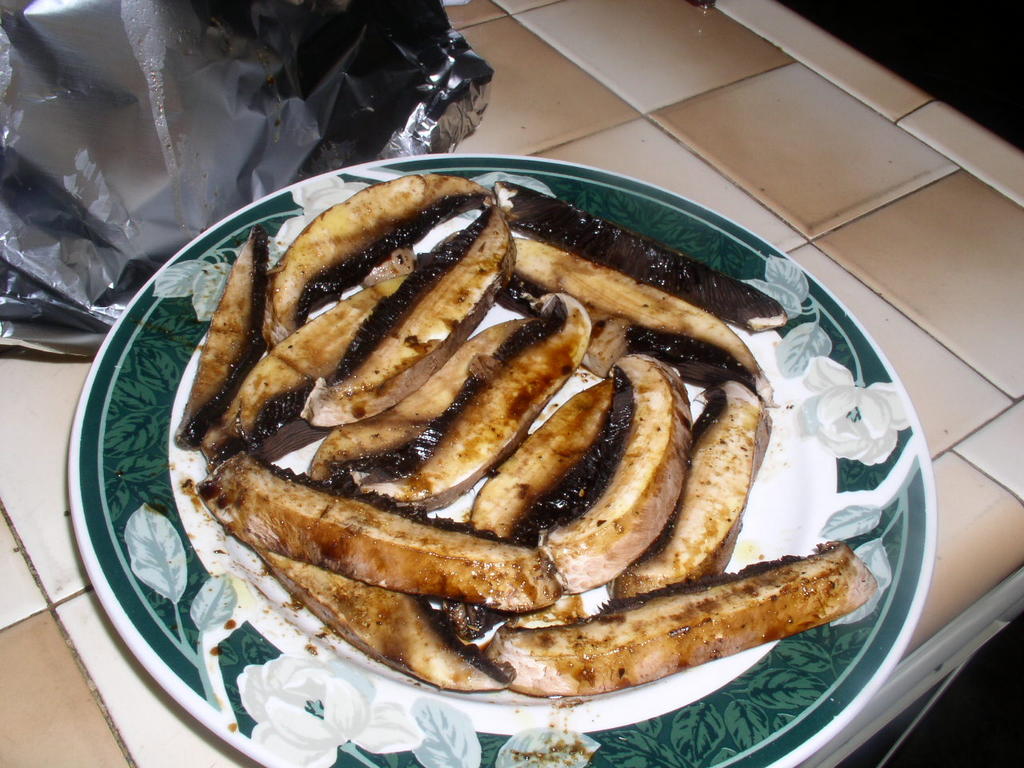
    My husband's motto is: Even if it's a dreary, gloomy Sunday afternoon, we grill, grill, grill! (Just picture him as a big Navy General smoking a large Cuban cigar). Actually, he only recently began to feel the love for the grill and has now become an incredible grill apprentice, soon to be meister of course. Yesterday he grilled his famous Kabobs a la Blaha, along with grilled portabella mushrooms. This was a team effort on both our parts. I made the marinade for the portabellas, and he grilled them. And by golly, they came out good. As you may, or may not, know, portabellas are large and thick, overgrown Crimini mushrooms. Their actual name are portobellos and evidently the usage of the two words "portobello vs. portabella" is simply an issue of a marketing brand. Make sure you buy plump firm and solid mushrooms. Avoid the limp or dried looking ones. They should not be shriveled or slippery (which indicates decomposition) and the mushroom should have a nice earthy smell. Now they sell them sliced and packaged, which are the portabellas we used.

    INGREDIENTS

    • 2 TBSP. Balsamic Vinegar
    • 1 TSP. Soy Sauce
    • 1/2 Tsp. Powdered garlic or 1 minched garlic clove
    • 1/2 Tsp. Oregano
    • 1/2 Tsp. Basil
    • 1/2 Tsp. coarse pepper
    • 1 Tsp. Kosher Salt
    • 1/4 Tsp. Thyme
    • 1/4 Cup. Extra Virgin Olive Oil
    • 1 Package pre-cut Portobello Mushrooms
    First, turn on the gril to medium-high. Make sure it's clean and well lubricated. In a small glass bowl add the first 8 ingredients and lightly wisk until salt dissolves. Then, in a steady stream, drizzle in the olive oil while still wisking away. With a pastry brush, brush the marinade on both sides of the portobellos. Grill for 5 to 6 minutes on each side until just cooked through. Here we have them next to Spinach Polenta and a Kabob a la Blaha.

    Sunday, October 23, 2005

    Chicken Stock 101

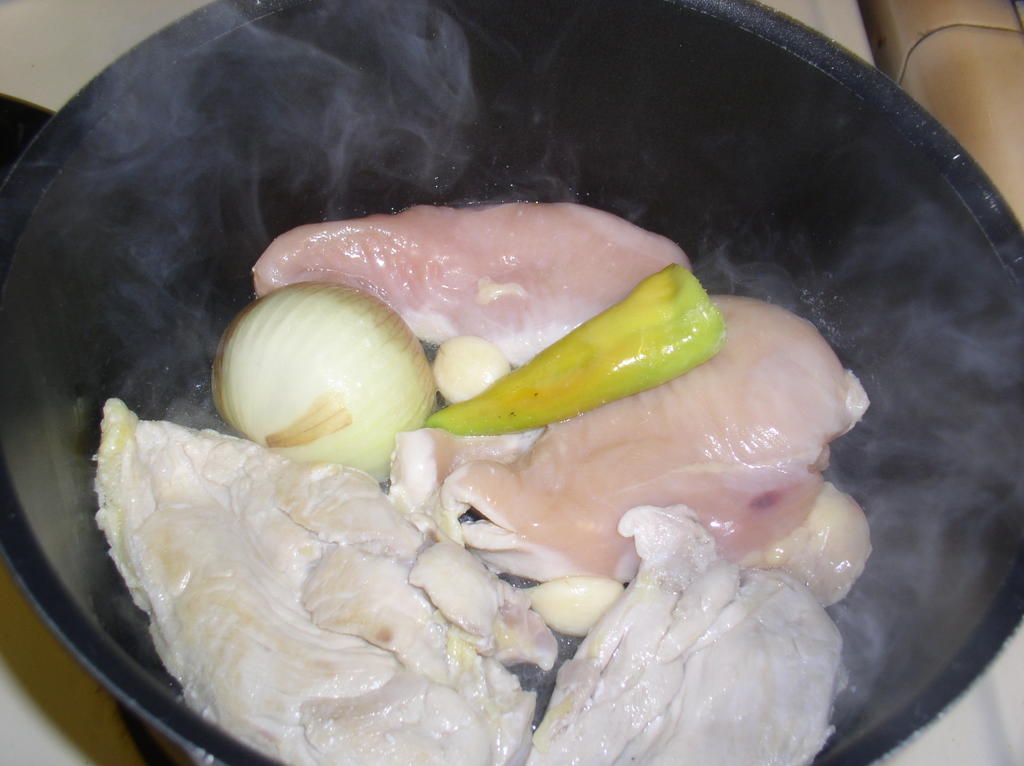
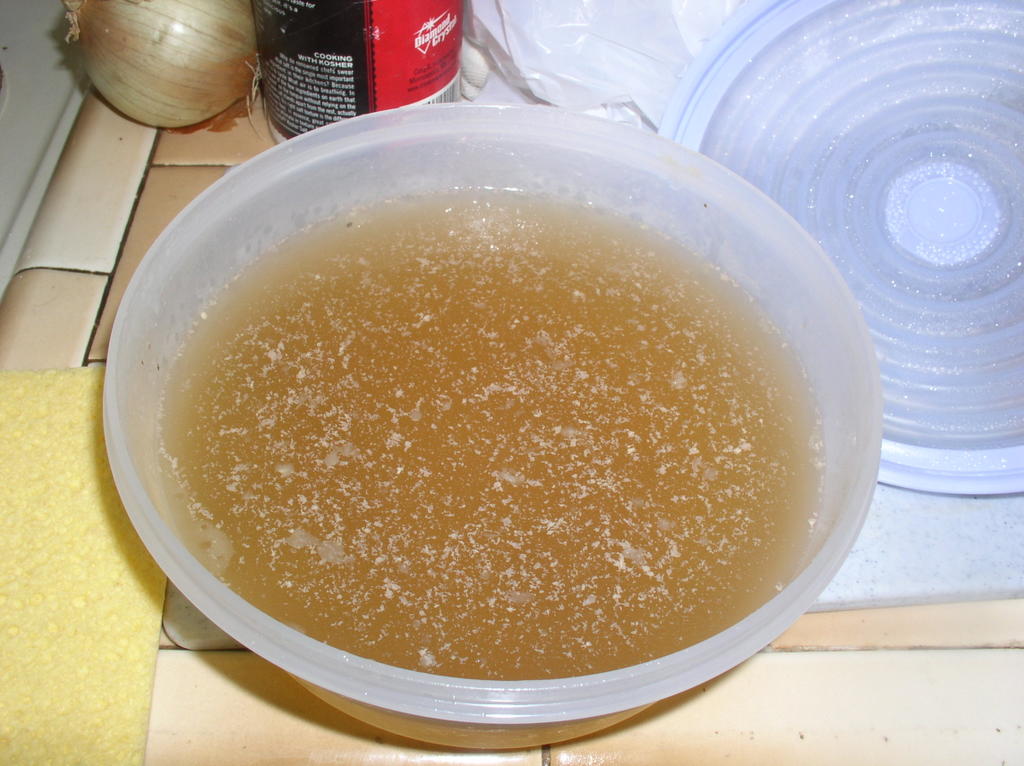
    I was cleaning out my refrigerator the other day and, lo and behold, I found four frozen chicken breasts that were hidding all the way in the back of the freezer. I didn't recall when I placed those breasts there so, instead of risking cooking these into tough, rubbery, no-flavor chicken, I decided to do the honorable thing and turn these frozen chickies into stock. Mind you, I've never made chicken stock, or any type of stock for that matter; this was my first time. I was also surprised that while I cleaned out the fridge, I found a half of an onion, an anahein pepper and garlic cloves. I think I had enough for stock, don't you think? Some other stock recipes call for celery, carrots and even leeks, but I found that even with a few veggies and some really good herbs, your chicken stock will come out fantastic. I used a bouquet garni, which I McGivered out of a tea bag and kitchen string. Pretty good, huh? The outcome? Really good stock that was not greasy at all. I used it for a Ropa Vieja recipe I made and the homemade chicken stock made all the difference in the flavor!

    INGREDIENTS

    • 1 Tsp. Olive Oil
    • 4 Chicken Breasts
    • 1/2 Onion, unpeeled
    • 1 Anaheim chile pepper, seeded
    • 2 Garlic cloves
    • 1 qt. Water
    • Kosher Salt, to taste
    • 1 Bouquet Garni with 1 tsp. thyme, oregano, basil, dried parsley, 1/2 tsp. coarse pepper and 1 bay leaf
    Place a large pot on the stove and turn the heat to medium-high. Add the olive oil. When it starts to sizzle a little, add the chicken breasts, onion, Anaheim chile and the garlic. Sear them until breasts are lightly brown on all sides, about 5 minutes. Add the water and bring to a boil. Add the bouquet garni and simmer for an hour. Strain stock and pour into containers use within two days or freeze, up to 2 months.